
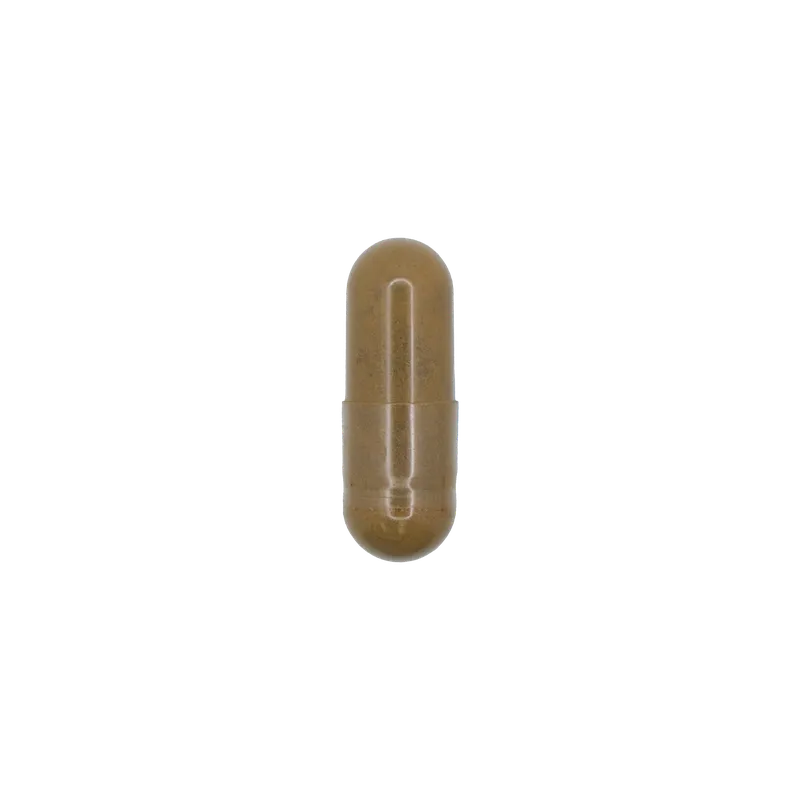
Veg Capsule
Ashwagandha
Stress Resistance
$14.00
$0.47 a day · 30-day supply
Ashwagandha is the classic adaptogen of Ayurveda. It supports a calm, balanced mood and the body's response to everyday demands.
In depth
About this supplement
What Is Ashwagandha?
Ashwagandha is a small gray-green shrub that grows on dry ground across India, the Middle East and North Africa. It belongs to the nightshade family, alongside tomato, potato and pepper. Its Sanskrit name points at the horse-like smell of the fresh root. This extract is drawn from root and leaf.
How It Works in the Body
The compounds the extract is measured by are withanolides: steroidal lactones, meaning a four-ring carbon skeleton much like the body's own steroid molecules, with a lactone ring attached at one end.
Ashwagandha sits in the adaptogen category, a traditional grouping for plants taken to help the body stay level under load. It has been used that way in Ayurvedic practice for a very long time, most often as a root preparation.
What It Supports
- A calm, balanced mood: Ashwagandha supports a calm, balanced mood, which is its central use in Ayurveda.
- Restful sleep: The species name somnifera means sleep-bearing, and the root supports restful sleep.
- Normal immune function: Withanolides play a role in normal immune function.
- Steady footing: Adaptogens are used to help the body maintain its balance when demands run high.
Who It May Suit
People drawn to Ayurvedic botanicals, and anyone who wants a single herb rather than a formula. The capsule is plant-based. Worth knowing: this is a root-and-leaf extract rather than root alone, and ashwagandha is a nightshade, so anyone avoiding that plant family should pass.
Good To Know
This is a standardized extract, measured by withanolide content rather than by weight of plant. Talk with your healthcare provider before use if you are pregnant or breastfeeding, if you take thyroid medication, a sedative or an immunosuppressant, or if you have a liver condition, since reports of liver injury with ashwagandha are uncommon but real.
At a glance
Allergens and certifications
-
01
Vegan
-
02
Kosher
-
03
Halal
-
04
Non-GMO
-
05
Gluten free
FAQ
Common questions
What is ashwagandha?
A shrub of the nightshade family, Withania somnifera, native to dry parts of India, the Middle East and Africa. Its root has been used in Ayurvedic practice for centuries. In supplement form it is usually an extract measured by its withanolide content, as this one is.
How does ashwagandha work?
Its characteristic compounds are withanolides, steroidal lactones built on a carbon skeleton similar to the body's own steroid molecules. Ashwagandha is classed as an adaptogen, a traditional category for plants used to help the body stay level under load rather than to push it in one direction.
What makes this extract different?
It covers root and leaf rather than root alone, and it is standardized, so each serving is defined by withanolide content instead of by how much plant material went in. Traditional Ayurvedic preparations use the root; leaf material is a more modern inclusion and worth knowing about.
Who is it for?
People who prefer a single well-defined botanical to a blend, and anyone interested in Ayurvedic herbs. The capsule is plant-based, so vegetarian and vegan eating are covered. Because ashwagandha is a nightshade, anyone who avoids that plant family will want to skip it.
What should I know before taking it?
Talk with your healthcare provider before use if you are pregnant or breastfeeding, if you take thyroid medication, a sedative, or a drug that suppresses the immune system. Mention a liver condition too, because cases of liver injury linked to ashwagandha are uncommon but documented, and that is worth a conversation.
Ingredients
What is in it
Every ingredient, as listed on the label.
Supplement Facts
Serving Size 1 veg capsule
| Ingredient | Amount Per Serving | % DV |
|---|---|---|
| Ashwagandha Extract (Withania somnifera) (Root and Leaf) (min. 2.5% Total Withanolides - 11 mg) | 450 mg | † |
† Daily Value not established.
Ingredients: Hypromellose (cellulose capsule), Stearic Acid (vegetable source), Rice Flour.
Related
Related supplements
Triple Ashwagandha Complex
Stress & Cognitive Support
Three ashwagandha extracts together: Sensoril, NooGandha and standardized root. Ashwagandha supports a calm, balanced mood.
$60.00
$2.00 a day
GABA
Mood Balance
GABA is the nervous system's main inhibitory signal, which supports a calm, balanced mood.
$22.00
$0.73 a day
Holy Basil Extract
Stress Resistance
Tulsi is the everyday adaptogen of Ayurveda, taken to support the body through demanding stretches.
$18.00
$0.60 a day
L-Theanine
Stress Resistance
L-theanine is an amino acid found in green tea, here as Suntheanine. Supports a calm, balanced mood and a settled frame of mind that does not tip into drowsiness.
$40.00
$1.33 a day
NeuroRest Peptide
Deep Rest & Calm Support
A melatonin-free sleep formula. Tryptophan is the amino acid the body turns into serotonin and then melatonin, which supports restful sleep.
$138.00
$4.60 a day
Rhodiola
Stress Resistance

Rhodiola is the classic adaptogen of the north. It supports the body's response to everyday demands.
$16.00
$0.53 a day